Then the Lord God formed a man from the dust of the ground and breathed into his nostrils the breath of life, and the man became a living being.
Genesis 2:7
Hello, world!
There’s simply no escaping talk of AI these days, and for a good reason. The ongoing growth in AI development and adoption represents perhaps the most profound technological shift of our time. AI permeates every aspect of society in ways that few appreciate, fundamentally changing our environments and how we interact with them and each other.
AI is both a product of our behaviours, and a shaper of our behaviours. And thus, it is in my humble opinion that we should spend time thinking about AI from a behavioural science (BS) perspective.
But for our first article, we will spend some time clarifying what these terms mean, because:
AI is not one thing.
BS is not one thing either.
Few know enough about both to appreciate how they intersect.
Artificial Intelligence
Peer under the hood of various AI tools, and you find something like one of these (don’t worry, you don’t have to learn/memorise them):
At the most fundamental level, AI is applied math.
But so is physics, and economics, and Dogecoin. What distinguishes AI from other applications of math is its form and function. Here’s one definition of AI:
AI is a field of computer science focused on creating smart machines that can perform tasks that typically require human intelligence, like learning, reasoning, and problem-solving.
There are two ways to programme AI—rule-based and machine learning (ML).
Rule-based AI, also known as good ole’ fashion’d AI (GOFAI), involves human-coded IF-THEN rules, wherein the AI programmer explicitly tells the computer how to make decisions. Suppose your grandma has mild dementia and frequently forgets to turn off the stove. You could install a stove with a GOFAI safety shutoff feature for her—IF stove temperature exceeds X, or IF liquid boils over and makes contact with stove panel, THEN shut off stove.
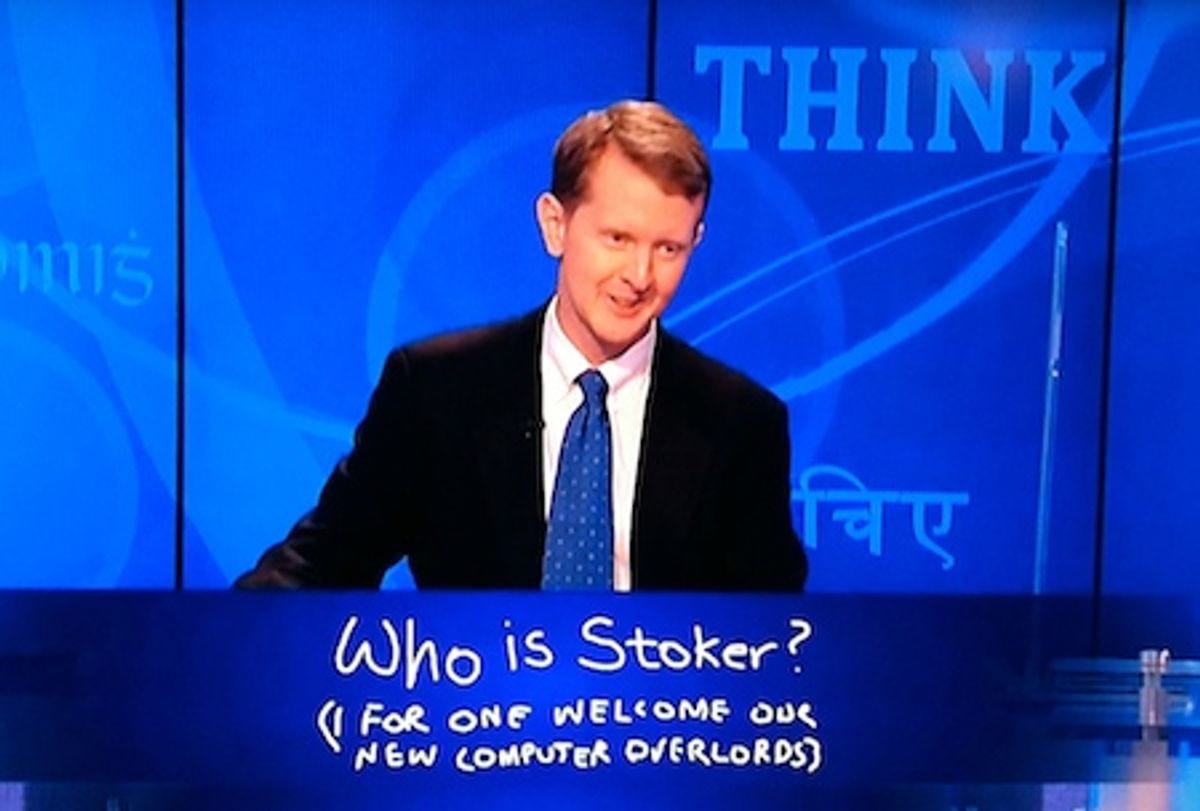
Ken Jennings welcomes our computer overlords after his loss against Watson. IEEE Spectrum
However, GOFAI also performs poorly in unpredictable, uncertain, and indeterminate situations typical of most real-world problems. Even within its trained domain, GOFAI can be fragile when unexpected situations arise.
In contrast, ML involves providing computer with some data and a mathematical framework, then letting it uncover patterns without hard-coded rules.1 Unlike GOFAI, ML produces robust learning under complexity. When ML products fail, they often do so more gracefully (which sometimes make it harder to actually spot failures). ML can also learn high dimensional structures that are difficult to explicitly programme as rules, such as facial recognition. No matter how many features you embed in a GOFAI rule (IF female, short, bob haircut, oversized round glasses…, THEN Edna Mode), it is exceedingly hard to create a specific enough rule for recognising a particular face. Woe to you if Edna wore contact lenses or grew out her hair.
These days, most people refer to ML when they talk about AI. And so shall we, for the rest of this series.
That said, many AI applications today combine both GOFAI and ML together. For example, the strongest chess engine today, Stockfish, combines a neural network (ML) with a decision tree (GOFAI). This will be a recurring theme this series—things don’t always fit into our nice little boxes.
Types of ML
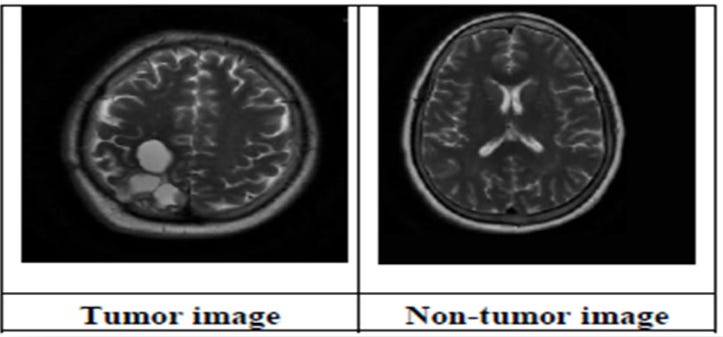
Supervised learning Supervised learning is like learning with a teacher. We provide the computer with data and the right answers, and it predicts the right answer in new scenarios. For example, we provide the computer millions of labelled pictures of CT scans with or without tumours, then ask it to predict whether a new image contains a tumour. With enough exemplars, the computer is able to distinguish between tumours and non-tumours.
Unsupervised learning is like self-discovery. We provide the computer with data without answers, and it figures out the underlying patterns. For example, we are interested in understanding who is at highest risk of developing a particularly aggressive type of cancer. Because we haven’t identified the relevant risk factors, we provide the computer with all plausible risk factors (genomic, lifestyle, clinical history), which the computer organises into groups (clustering), organised by profile similarities. From there, we map cancer incidence rates onto the groups, and realise one group—specific gene mutation, chronic sleep deprivation, high inflammatory markers—has the highest concentration of individuals who go on to develop that specific cancer.
Reinforcement learning Reinforcement learning is outcome driven. We establish an environment with set outcomes, and allow the computer (or agent) to interact with the environment. Actions leading to positive outcomes are rewarded, while actions leading to negative outcomes are penalised. Over time, the agent optimises its actions to maximise payoffs (here’s a cute illustration). For example, we are interested in teaching an agent to drive a car. The rules: get from Point A to Point B. Rewarded actions: moving closer to Point B. Penalised actions: drifting out of lane, braking hard, colliding with other objects, causing near misses, disobeying traffic rules. With enough practice, the agent eventually learns to drive.
Many AI applications today use a combination of various ML techniques. For example, LLMs like ChatGPT and Claude are developed following this structure broadly.
Phase 1: Unsupervised/self-supervised learning The agent is fed massive amounts of English text, which they self-organise (e.g., how areyou? goes with I’m fine) and self-teach by hiding parts of the data and trying to predict the correct output (e.g., How are___? I’m fine.). In doing so, they learn the rules (i.e., grammar) of English.
Phase 2: Supervised fine tuning A human programmer then provides curated examples of instruction/responses that they want the AI to mimic.
Instruction: Explain like I'm five - what is AI?
Response: AI is a computer program that learns patterns...
The AI learns from these examples the appropriate responses under specific prompts.
Phase 3: Reinforcement learning from human feedback The programmer then scores the LLM's output on its quality. Good scores are rewarded, thus increasing similar future outputs. Bad scores are penalised, thus decreasing them.
Properties of AI
To segue to the next section on the BSes, let us return to our AI definition:
AI is a field of computer science focused on creating smart machines that can perform tasks that typically require human intelligence, like learning, reasoning, and problem-solving.
As you may have noticed, the concept of intelligence (specifically of the human variety) is central in the development of AI. An early goal of AI development was to pass the Turing Test—to build AI that exhibits intelligent behaviour indistinguishable from a human. Beyond function, AI form is also deeply inspired by the human brain and learning processes. The class of ML techniques that form the foundation of many modern AI advancements are called neural networks (a sub-type of neural network is called a long-short term memory neural network). Reinforcement learning draws directly from learning theory.
Yet, AI, being built on computers, are fundamentally different from humans. Our underlying structures are different, as is how we perceive and interact with the environment, our motivational states, and how we learn. Accordingly, AI can at once far surpass us in certain problem-solving tasks, and fail spectacularly at other basic tasks (Moravec’s paradox).
Ultimately, we should remember that AI comprises an array tools, in particular, a rapidly developing array. As we progress through this series, I hope this primer has impressed upon you the breadth of AI types and use cases, in hope you exercise some restraint when the urge to lump them together arises. And, for those so inclined, here is a good glossary of common AI terminology, some of which I have intentionally omitted mentioning.
The Behavioural Sciences
The BSes are a collection of theories and methods, including some which bear only passing similarity to each other. What they do share however, are a common focus on understanding and changing behaviours.
Which begs the questions:
What exactly are behaviours?
Behaviours of what exactly?
The questions are seemingly simple, but the answers are less straightforward than one might think. For our purposes, let’s go with the following definitions:
What are behaviours?
Forget science and philosophy. We all behave, and in our everyday lives, we all interact with others who behave. Given the centrality of behaviour in our phenomenological experience, you would think that we have a commonly accepted definition for it. We don’t. But as is often the case, the most parsimonious definition is also the most useful one:
The behaviours of X are what X do.
By this definition, we can talk about the behaviours of neutrinos, neurons, newts, or neutron stars. This leads to our second question:
Behaviours of What?
No sane behavioural scientist will lay claim to neutrino and neutron star behaviour. But of neuron and newt behaviour, things become less clear. For example, ethologist Jerry Hogan defines behaviour as the expression of activity in the nervous system. There exists a top tier academic journal called Behavioural and Brain Science.2 Many also (rightfully) believe studying non-human animal behaviour gains us important insights into human behaviour.
There are many levels (or units, if you will) of analysis by which we can approach this problem. Here are some possible answers:
Molecular (aka Omics) Level Example: Track small-molecule metabolites to identify distinct diabetes sub-types and tailor medication precisely for optimal treatment response.
Hormonal & Molecular Signalling Level Example: Develop drugs that mimic natural hormones that improve insulin secretion and suppress insulin resistance.
Cellular & Subcellular Level Example: Develop small molecule drugs that fix mitochondrial dysfunction to restore basic cellular insulin sensitivity.
Tissue & Organ Level Example: Perform bariatric surgery to reduce calorie intake and induce hormonal changes in the gut that increase insulin production and sensitivity
Individual Human Level Example: Prescribe diet, physical activity, and sleep modifications to improve glucose control and decrease weight.
Population/Systems Level Example: Re-balance the economics of food (e.g., introduce a sugar tax and/or subsidies for whole/minimally-processed foods).
For our purposes, we can think of the BSes as situated within the last two levels. Said differently,
the behavioural sciences are interested in the science of what humans do, as well as emergent phenomena that arise from their interactions.
These phenomena include things like culture, networks, and institutions. There are some important implications in how we defined BSes. Let’s unpack them.
1. Who’s invited to the party?
By our definition, the behaviours of hormones, neurons, and organs, while important, are not the units of analysis the BSes are concerned with (sorry, neuroscience!3). Neither is the behaviour of newts (sorry, ethology!4).
Rather, the BSes seek to understand and influence what whole individuals, and groups of individuals, do. For some of you, our definition may feel uncomfortably broad, and rightfully so. There are several core disciplines typically associated with the BSes, and we can find renowned PhD programmes in BSes sited within public health, business, and social sciences schools.5 But our definition can also include other disciplines that might chafe at being labelled as BS.
Here’s a non-exhaustive list of disciplines that can be included by our definition:6
2. Who’s friends with who?
Folks don’t always get along with others at a party. Particularly when they think they have very important things to say. Doubly sowhen they aren’t particularly interested in what others have to say. Here are three sources of tension:
Methodological differences Different disciplines employ different methods to understand behaviours. Psychology relies greatly on highly controlled experiments and questionnaires. Anthropology uses immersive ethnographic observations. Engineering uses… well, whatever it is engineering uses. Increasingly, we are seeing interdisciplinary teams using diverse methods to understand and change behaviours, but such teams are still very much the exception rather than the norm.
Conceptual differences Empiricism vs. rationalism. Reductionism vs. holism. Positivism vs. constructivism. Universalism vs. contextualism. Idiographic vs. nomothetic. Stochastic vs. deterministic. We can go on. Different disciplines apply different lenses to the same phenomena. Beyond doing things differently (methodological differences), they also see things differently. Sometimes (oftentimes?), even within the same discipline, seemingly intractable differences can emerge.
Differences in units of analysis There’s a natural tension between analysing behaviour of individual humans vs. groups of humans. What’s true for the individual is not necessarily true for the group. What’s good for group is not necessarily good for the individual. Within the BSes, there has been recent calls toward shifting the focus of policy action away from the individual (i-frame) towards the system (s-frame).7 And policy action targeting individuals vs. systems can look quite different from one another.
3. Downstream phenomena are valid objects of enquiry… including AI?
Our behaviours often produce products. These products are of interest to the BSes because
They help us understand the behaviours that produce them. We use metrics such as heart rate and VO₂ max to understand physical activity. Traffic flow and density maps help us understand how infrastructure facilitates or constrains movement. In the TV series Adolescence, Detective Inspector Bascombe’s son gives him a tutorial on the link between emojis and incel culture.
We interact with these products, which in turn change our behaviours. Some runners treat increasing VO₂ max as the end goal of running. We choose an alternate route when our map shows the usual travel path is congested. Sharing, commenting, and interacting with football memes further perpetuates their message.
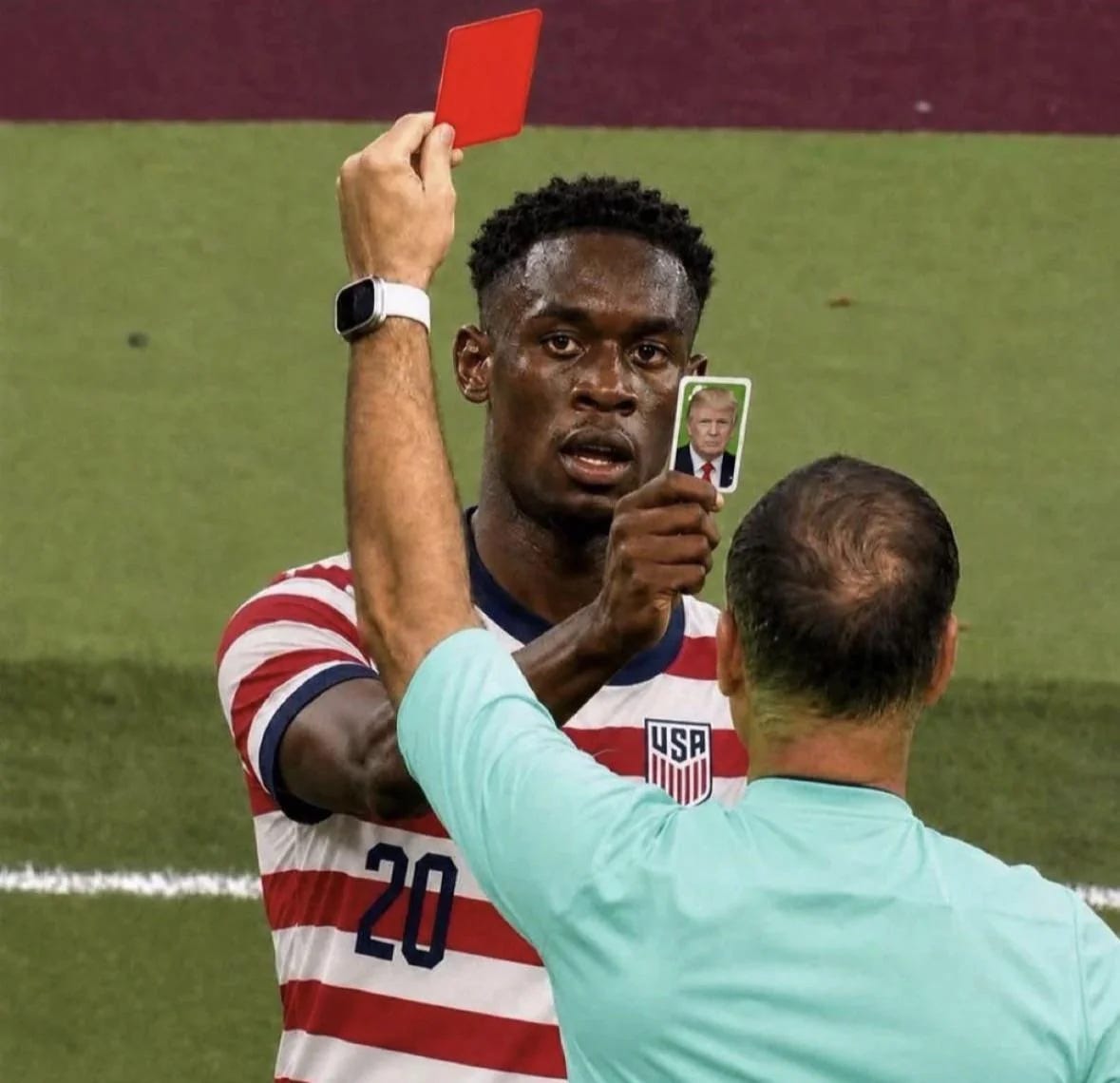
Balogun brandishing his trump card. From u/inbetweenframe in r/AskTheWorld
AI, as a product of our behaviours, ticks both boxes.
Regarding the former, on a fundamental level, as we build AI to simulate human learning and problem-solving, we in the process learn more about ourselves and our own behaviours, both in where AI behaviour is similar and different from ours.
Concluding Remarks
AI is not one thing.
BS is not one thing.
In fact, both are many different things which are sometimes at odds with each other. That makes it rather challenging to talk about how they relate to each other coherently. Fortunately, the folks over at the Behavioural Insights Team have put together a framework on how AI and the BSes intersect, organised around the 4As of augment, adopt, align, and adapt. In our subsequent articles, we will be discussing and evaluating this framework. Stay tuned.
Thanks for reading! Subscribe for free to receive new posts and support my work.
The term machine learning anthropomorphises what computers do to some degree. We will continue with this metaphor, as it provides a convenient way to talk about AI.
I suspect many will be upset with this exclusion. Neuroscience as the adjacent unit of analysis to the whole individual produces many important contributions to our understanding of individuals’ behaviour. But by our definition (and for reasons that will take a whole article to unpack), it is not included in the BSes.
Some disciplines listed herein, including engineering and design, are not scientific disciplines per se. Rather they are science adjacent, in that they use scientific knowledge to solve practical problem.
This article is published in Behavioral and Brain Sciences, referenced earlier. BBS adopts an open peer commentary format, in which other experts are invited to comment on (i.e., rebut) the article, to which the authors can respond to. The article itself, commentaries, and authors’ response are all highly illuminating.